International Patent Drafting Training Program
Transforming inventions into well-crafted patent applications requires a combination of knowledge and skills that can only be acquired through a comprehensive hands-on experience. Learning from experienced practitioners, this course will enhance your patent drafting skills and secure the best available protection for your or your client´s inventions. The program has been developed by WIPO in cooperation with the International Federation of Intellectual Property Attorneys (FICPI).

IPDTPE26S1
This training program is ideal for those with professional or commercial interest in patents, and who are looking to enhance their patent drafting skills across different technical fields. Designed as practice-oriented training, inventors and those providing services to them can acquire technical skills and knowledge necessary to prepare and file successful patent applications, including the capacity to draft all-important claims that determine the scope and coverage of the protection to be granted by a patent.
This program, offered in English, will utilize state of the art WIPO e-learning tools, while also giving unparalleled access to highly qualified patent drafting experts from across the globe both virtually, through the use of theme-based discussion forums and individual feedback and mentoring, and face-to-face, through a workshop conducted at the WIPO Headquarters in Geneva (Switzerland).
This Training Program offers
- Hands-on experiential learning delivered by globally recognized instructors where practical exercises and personal feedback are the main learning instruments.
- A curriculum specifically designed for exposure to international patent practice, to give participants an edge when transforming ideas into solid global patent portfolios.
- An opportunity to build an international network of peers and mentors encounter engaged in patent drafting across the world.
Applicants must have:
- Bachelor’s level degree in law, and/ or in science and technology such as engineering, agriculture, environmental, information technology/ ICT, life sciences, medicine, physics, chemistry, communication sciences, biology, or biotechnology.
ORAt least 1 year of professional/ work or research experience in patent drafting or patent prosecution; and - General knowledge of IP and patents, at least equivalent to the WIPO Academy Distance Learning course DL301 - Advanced Course on Patents; and
- Proficiency in written and spoken English;
- Completed your bachelor’s degree or higher in English, or
- Scored TOEFL iBT 80/120 or IELTS 6.5/9 in the last three (3) years.
- Claim drafting techniques and methodologies
- Specification drafting - description, summary, background/ abstract for inventions
- Analysis of inventions
- Strategic filing decisions
- Patent agents and candidates;
- Staff of technology transfer offices at universities, research centers, or WIPO Technology and Innovation Support Centres (TISCs);
- Professionals supporting inventors in obtaining patents who wish to improve their drafting skills;
- Innovators, researchers, and others seeking to enhance patent drafting skills.
Applicants will be required to submit an online application with supporting documents. WIPO will assess applications on a rolling basis and select a limited number of eligible candidates for the training program.
A limited number of scholarships are available for applicants from least developed countries, developing countries and countries with economies in transition.
Registration fees
A fee of USD ($) 1000 is payable upon notification of acceptance. Discounted rates apply for the following categories of participants:
| Developed Countries | Developing Countries & Economies in Transition | Least Developed Countries | |
| Professionals and Non-Students | USD 1000 standard fee | USD 400 60% discount | USD 200 80% discount |
| Students | USD 800 20% discount | USD 400 60% discount | USD 200 80% discount |
(Note: This fee does not cover costs associated with travel, transport and lodging for Phase II: Geneva Workshop.)
Documents to be uploaded
- Transcript of University studies (Translated in English) *
- Recent Curriculum Vitae *
- Identification document such as passport or national ID *
- For non-native speakers proof of English language: TOEFL / CAE or acceptable equivalent
- DL 301 Certificate
- Other Course Certificate (not delivered by WIPO)
- Recommendation letter
- Course Certificate delivered by WIPO
- University Degree(s)

- Fundamentals of drafting claims and specifications.
- Tutor-led online modules:
- Fundamentals of Patent Drafting
- Parts of a Patent Application
- Relevance of Claim Drafting: Types of claims
- Designing Claims
- Drafting a Descriptions
- Preparing Drawings
- Complete practical exercises and gain confidence to assess the background and description of inventions, and formulate credible sets of claims and specification.

This module introduces participants to the core objectives and principles of patent drafting. It explains the purpose of patents, their structure, and the importance of drafting claims that accurately reflect inventive contributions.
By the end of this module, participants will:
- Understand the role of patent drafting in securing intellectual property rights.
- Identify the main components and legal significance of patent applications.
- Recognize the connection between invention disclosure and claim formulation.
This module introduces participants to the core objectives and principles of patent drafting. It explains the purpose of patents, their structure, and the importance of drafting claims that accurately reflect inventive contributions.
By the end of this module, participants will:
- Understand the role of patent drafting in securing intellectual property rights.
- Identify the main components and legal significance of patent applications.
- Recognize the connection between invention disclosure and claim formulation.
This module lays the conceptual foundation for all subsequent drafting exercises.
This module examines each part of a patent application—title, abstract, background, description, claims, and drawings—and explains its purpose and interdependence within the application as a whole.
By the end of this module, participants will:
- Identify and describe the purpose of each section in a patent application.
- Understand how the various parts work together to define the invention.
- Apply structural consistency when preparing full patent documentation.
This module examines each part of a patent application—title, abstract, background, description, claims, and drawings—and explains its purpose and interdependence within the application as a whole.
By the end of this module, participants will:
- Identify and describe the purpose of each section in a patent application.
- Understand how the various parts work together to define the invention.
- Apply structural consistency when preparing full patent documentation.
Provides the structural blueprint needed for effective drafting practice.
This module introduces the different claim types—independent, dependent, and multiple claims—and their impact on the scope and enforceability of a patent. Participants will analyze examples and learn how to tailor claim formats to invention characteristics.
By the end of this module, participants will:
- Differentiate between independent and dependent claims and their respective roles.
- Draft appropriate claim sets for different technical contexts.
- Evaluate claim wording for clarity and strategic protection.
This module introduces the different claim types—independent, dependent, and multiple claims—and their impact on the scope and enforceability of a patent. Participants will analyze examples and learn how to tailor claim formats to invention characteristics.
By the end of this module, participants will:
- Differentiate between independent and dependent claims and their respective roles.
- Draft appropriate claim sets for different technical contexts.
- Evaluate claim wording for clarity and strategic protection.
Emphasizes understanding claim hierarchy and interdependence.
This module focuses on the logic and structure of claim drafting. Participants will learn how to identify essential inventive features, define boundaries of protection, and phrase claims using appropriate terminology and syntax.
By the end of this module, participants will:
- Design well-balanced claims that reflect the inventive step.
- Apply correct syntax and technical precision in claim language.
- Develop claims that maximize protection while minimizing ambiguity.
This module focuses on the logic and structure of claim drafting. Participants will learn how to identify essential inventive features, define boundaries of protection, and phrase claims using appropriate terminology and syntax.
By the end of this module, participants will:
- Design well-balanced claims that reflect the inventive step.
- Apply correct syntax and technical precision in claim language.
- Develop claims that maximize protection while minimizing ambiguity.
Hands-on drafting practice using guided case examples.
This module provides detailed guidance on drafting the descriptive section of a patent application. Participants learn to articulate the invention’s technical background, objectives, and embodiments clearly and completely.
By the end of this module, participants will:
- Prepare accurate and comprehensive technical descriptions that support claims.
- Write clear, logically organized descriptions that comply with patent office requirements.
- Link descriptive language effectively with claims for legal coherence.
This module provides detailed guidance on drafting the descriptive section of a patent application. Participants learn to articulate the invention’s technical background, objectives, and embodiments clearly and completely.
By the end of this module, participants will:
- Prepare accurate and comprehensive technical descriptions that support claims.
- Write clear, logically organized descriptions that comply with patent office requirements.
- Link descriptive language effectively with claims for legal coherence.
Focuses on clarity, completeness, and logical structure in technical writing.
This module teaches participants how to prepare patent drawings that complement and clarify the written disclosure. It highlights international standards for patent illustrations and explains their role in defining claim scope.
By the end of this module, participants will:
- Create accurate technical drawings aligned with descriptive content.
- Ensure drawings meet international formal and technical requirements.
- Use drawings to reinforce understanding and interpretation of the invention.
This module teaches participants how to prepare patent drawings that complement and clarify the written disclosure. It highlights international standards for patent illustrations and explains their role in defining claim scope.
By the end of this module, participants will:
- Create accurate technical drawings aligned with descriptive content.
- Ensure drawings meet international formal and technical requirements.
- Use drawings to reinforce understanding and interpretation of the invention.
Completes the drafting foundation by integrating visual and textual representation.

- Workshop with highly qualified patent experts, hosted in WIPO Headquarters, Geneva.
- Topics will cover:
- Fundamentals of Patent Law and Specification Structure
- Making the Most Out of the Inventor Interview
- An Expert Approach to Claim Drafting – Functional Analysis
- Strategic Drafting in Specific Technology Areas
- Drafting for Different Jurisdictions
- Thinking Ahead: Drafting Enforceable Claims
- Combine patent drafting theory and practice to develop skills in drafting patent claims and specifications, covering a comprehensive scope of protection.
This module reviews the key legal foundations governing patents and how they shape specification drafting. Participants revisit patent law principles and their influence on claim language, structure, and enforceability.
By the end of this module, participants will:
- Understand the legal underpinnings of patent drafting and claim construction.
- Apply legal principles to improve clarity and compliance in drafting.
- Recognize how law and structure interact in strong patent specifications.
This module reviews the key legal foundations governing patents and how they shape specification drafting. Participants revisit patent law principles and their influence on claim language, structure, and enforceability.
By the end of this module, participants will:
- Understand the legal underpinnings of patent drafting and claim construction.
- Apply legal principles to improve clarity and compliance in drafting.
- Recognize how law and structure interact in strong patent specifications.
Reinforces the legal-technical relationship in patent drafting.
This module focuses on effective communication with inventors to extract essential technical information. Participants learn structured interview techniques to uncover inventive concepts and translate them into claims.
By the end of this module, participants will:
- Conduct focused inventor interviews to identify the inventive step.
- Convert technical insights into precise claim language.
- Establish collaborative communication that enhances application quality.
This module focuses on effective communication with inventors to extract essential technical information. Participants learn structured interview techniques to uncover inventive concepts and translate them into claims.
By the end of this module, participants will:
- Conduct focused inventor interviews to identify the inventive step.
- Convert technical insights into precise claim language.
- Establish collaborative communication that enhances application quality.
Emphasizes real-world interpersonal and analytical drafting skills.
This module advances participants’ drafting abilities through functional claim analysis. Using case-based exercises, it trains participants to frame claims strategically for broader protection while maintaining validity.
By the end of this module, participants will:
- Perform functional analysis of inventions to identify critical claim features.
- Draft high-quality, enforceable claims that maximize scope.
- Evaluate claim strength through comparison with prior art.
This module advances participants’ drafting abilities through functional claim analysis. Using case-based exercises, it trains participants to frame claims strategically for broader protection while maintaining validity.
By the end of this module, participants will:
- Perform functional analysis of inventions to identify critical claim features.
- Draft high-quality, enforceable claims that maximize scope.
- Evaluate claim strength through comparison with prior art.
Strengthens ability to link inventive functions with claim coverage.
This module explores sector-specific strategies for drafting patent applications, including mechanical, chemical, electrical, and biotechnological inventions. Participants analyze best practices for diverse technical domains.
By the end of this module, participants will:
- Adapt claim and description drafting techniques to various technologies.
- Recognize domain-specific challenges and how to address them.
- Develop tailored drafting strategies for multidisciplinary innovation.
This module explores sector-specific strategies for drafting patent applications, including mechanical, chemical, electrical, and biotechnological inventions. Participants analyze best practices for diverse technical domains.
By the end of this module, participants will:
- Adapt claim and description drafting techniques to various technologies.
- Recognize domain-specific challenges and how to address them.
- Develop tailored drafting strategies for multidisciplinary innovation.
Bridges theory with practice across multiple technology fields.
This module examines international patent systems and jurisdictional variations in drafting requirements. It helps participants align their applications with regional laws to facilitate global protection.
By the end of this module, participants will:
- Understand jurisdiction-specific drafting requirements and nuances.
- Adjust claim language to meet filing standards in major IP offices.
- Develop globally adaptable patent documentation strategies.
This module examines international patent systems and jurisdictional variations in drafting requirements. It helps participants align their applications with regional laws to facilitate global protection.
By the end of this module, participants will:
- Understand jurisdiction-specific drafting requirements and nuances.
- Adjust claim language to meet filing standards in major IP offices.
- Develop globally adaptable patent documentation strategies.
Provides comparative insight into international patent frameworks.
This capstone module teaches participants to draft claims with enforceability and litigation in mind. It highlights common drafting pitfalls, enforcement scenarios, and proactive claim structuring for long-term protection.
By the end of this module, participants will:
- Draft claims designed for strong enforceability and legal defense.
- Identify weaknesses that may hinder patent enforcement.
- Integrate foresight and strategy into claim drafting.
This capstone module teaches participants to draft claims with enforceability and litigation in mind. It highlights common drafting pitfalls, enforcement scenarios, and proactive claim structuring for long-term protection.
By the end of this module, participants will:
- Draft claims designed for strong enforceability and legal defense.
- Identify weaknesses that may hinder patent enforcement.
- Integrate foresight and strategy into claim drafting.
Completes the workshop by merging drafting precision with legal foresight.

- Follow-up mentoring focused on reinforcing the skills acquired in Phases 1 and 2 of the course.
- Advanced patent drafting exercises and discussions designed to address drafting skills in the participants´ fields of technical expertise.
- Expert-guided practical exercises and discussions will cover:
- Claim Drafting in View of Prior Art
- Amending Claims and Draft Specification
- Claim Drafting for Chemistry/ Biology
- Claim Drafting for Electronics/ Mechanics
- Opportunity to directly interact and seek hands-on advice from instructors.
This module focuses on analyzing prior art and incorporating those insights into strategic claim drafting. Participants practice refining claim scope to ensure novelty and inventive step while avoiding prior art overlap.
By the end of this module, participants will:
- Identify relevant prior art and assess its impact on claim scope.
- Draft claims that maintain novelty and inventive step despite prior disclosures.
- Balance broad protection with defensible claim structure.
This module focuses on analyzing prior art and incorporating those insights into strategic claim drafting. Participants practice refining claim scope to ensure novelty and inventive step while avoiding prior art overlap.
By the end of this module, participants will:
- Identify relevant prior art and assess its impact on claim scope.
- Draft claims that maintain novelty and inventive step despite prior disclosures.
- Balance broad protection with defensible claim structure.
Teaches defensive and strategic drafting approaches against prior art.
This module provides hands-on training in claim and specification amendments. Participants learn how to respond effectively to examination reports, narrowing or expanding claims while maintaining legal and technical consistency.
By the end of this module, participants will:
- Amend claims and descriptions to comply with examiner requirements.
- Maintain coherence between amended claims and supporting disclosure.
- Apply amendment strategies that strengthen patent enforceability.
This module provides hands-on training in claim and specification amendments. Participants learn how to respond effectively to examination reports, narrowing or expanding claims while maintaining legal and technical consistency.
By the end of this module, participants will:
- Amend claims and descriptions to comply with examiner requirements.
- Maintain coherence between amended claims and supporting disclosure.
- Apply amendment strategies that strengthen patent enforceability.
Focuses on practical prosecution and amendment best practices.
This module explores domain-specific drafting for chemical, pharmaceutical, and biotechnological inventions. Participants learn to address challenges related to sequence listings, formulations, and compound characterization.
By the end of this module, participants will:
- Draft claims and specifications suitable for chemical and biotech inventions.
- Comply with disclosure and support requirements for life sciences patents.
- Manage domain-specific challenges in data representation and claim scope.
This module explores domain-specific drafting for chemical, pharmaceutical, and biotechnological inventions. Participants learn to address challenges related to sequence listings, formulations, and compound characterization.
By the end of this module, participants will:
- Draft claims and specifications suitable for chemical and biotech inventions.
- Comply with disclosure and support requirements for life sciences patents.
- Manage domain-specific challenges in data representation and claim scope.
Develops precision drafting skills for life sciences patents.
This module focuses on inventions in electronics, telecommunications, software, and mechanical engineering. Participants practice claim drafting techniques that effectively capture system, method, and apparatus claims.
By the end of this module, participants will:
- Draft functional and structural claims for mechanical and electronic inventions.
- Adapt drafting techniques to complex technical systems and interfaces.
- Anticipate examination challenges in fast-evolving technology fields.
This module focuses on inventions in electronics, telecommunications, software, and mechanical engineering. Participants practice claim drafting techniques that effectively capture system, method, and apparatus claims.
By the end of this module, participants will:
- Draft functional and structural claims for mechanical and electronic inventions.
- Adapt drafting techniques to complex technical systems and interfaces.
- Anticipate examination challenges in fast-evolving technology fields.
Equips participants with practical drafting experience across engineering domains.
This final module centers on one-on-one and group mentoring sessions, allowing participants to seek expert feedback, discuss specific challenges, and refine their drafting portfolios based on personalized guidance.
By the end of this module, participants will:
- Apply mentor feedback to improve their drafting proficiency.
- Gain confidence in handling complex patent drafting scenarios.
- Demonstrate readiness to produce complete, high-quality patent applications.
This final module centers on one-on-one and group mentoring sessions, allowing participants to seek expert feedback, discuss specific challenges, and refine their drafting portfolios based on personalized guidance.
By the end of this module, participants will:
- Apply mentor feedback to improve their drafting proficiency.
- Gain confidence in handling complex patent drafting scenarios.
- Demonstrate readiness to produce complete, high-quality patent applications.
Concludes the program with expert-led refinement and practical consolidation.
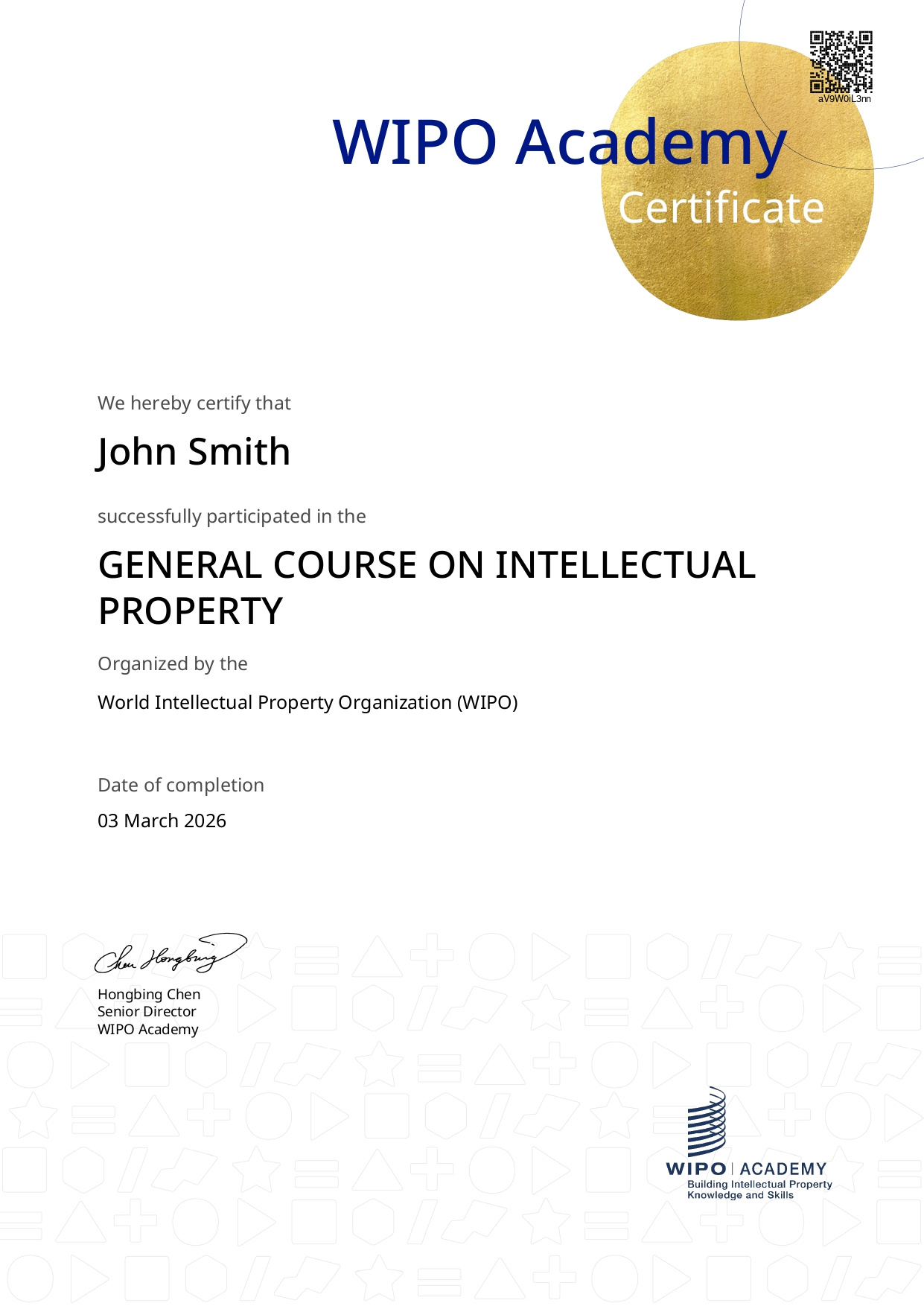
A WIPO Certificate will be awarded to those who successfully complete Phases 1, 2 and 3 of the training program, and pass the Evaluations scheduled at the end of the training program.
FOR MORE INFORMATION
Please contact us at ipdtp@wipo.int
